
장바구니


이대발 난 연구소
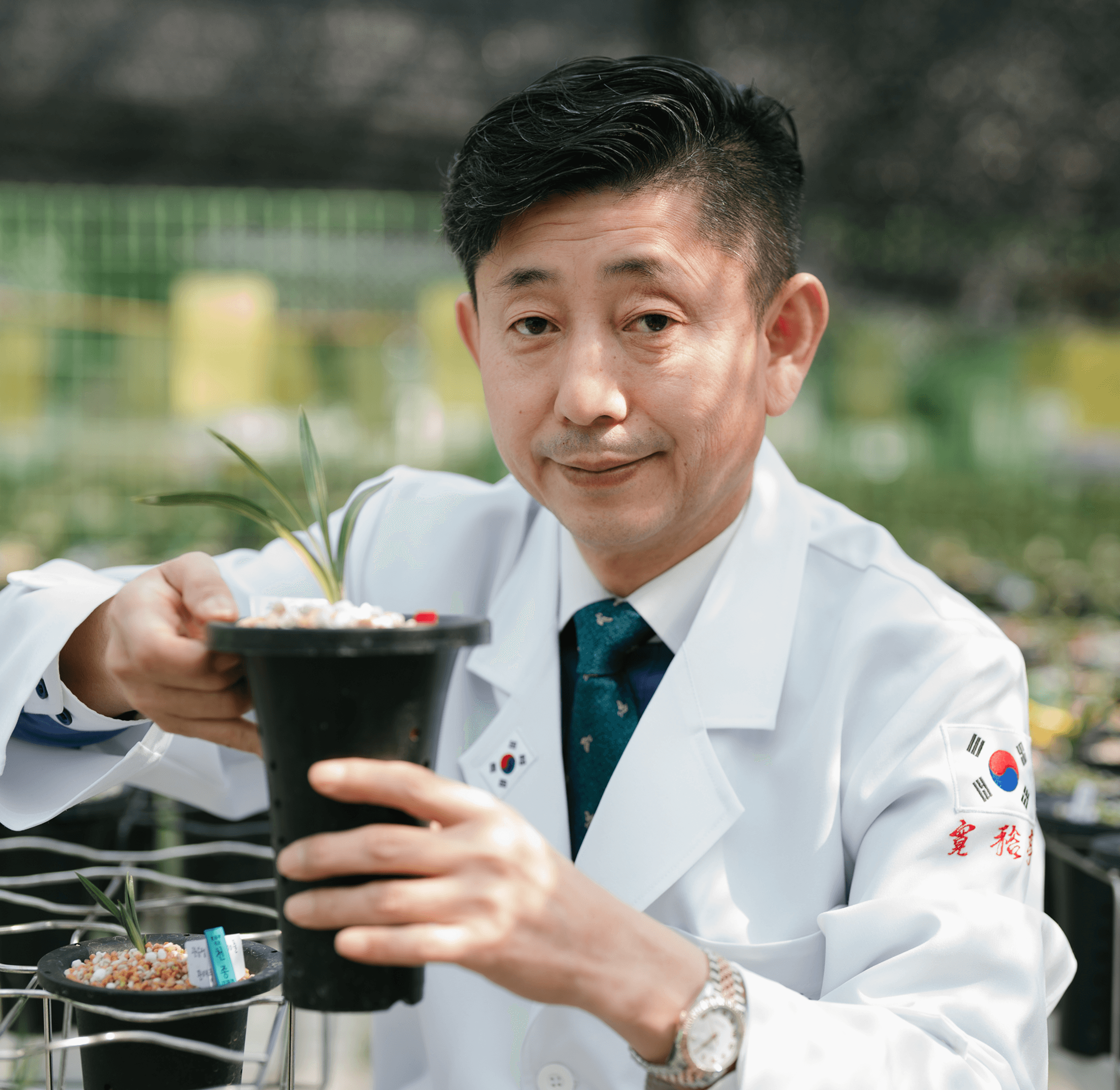
한국춘란 업계 최초 박사
한국춘란 업계 최초 박사
이대건 박사 Dr. Lee Dae Gun
이대발 난 연구소는 이대건 박사 Dr.Lee가 한국춘란에 대한 체계적이고 과학적인 연구를 수행하는 국내 최초의 춘란 전문 연구기관입니다.
이대건 박사는 한국춘란 분야에서 최초로 박사학위를 취득한 전문가로서, 20년에서 40년간의 현장 경험과 학문적 연구를 통해 한국춘란의 형태학적 특성, 유전적 다양성, 그리고 재배 기술 발전에 기여해 왔습니다.
박사학위 논문을 통해 한국춘란과 중국춘란의 형태학적 차이와 유전적 다양성을 규명하였으며, 이는 한국 야생 원종의 보호와 진품 구별에 중요한 과학적 근거를 제공하고 있습니다.
이대발 난 연구소는 이대건 박사 Dr.Lee가 연구하고 개발한 첨단 기술과 과학적 방법론을 바탕으로 한국춘란의 미래를 선도해 나가고 있습니다.
박사학위 논문
Cymbidium goeringii의 형태학적 특성 및 Microsatellite DNA 좌위에 의한 다양성 분석
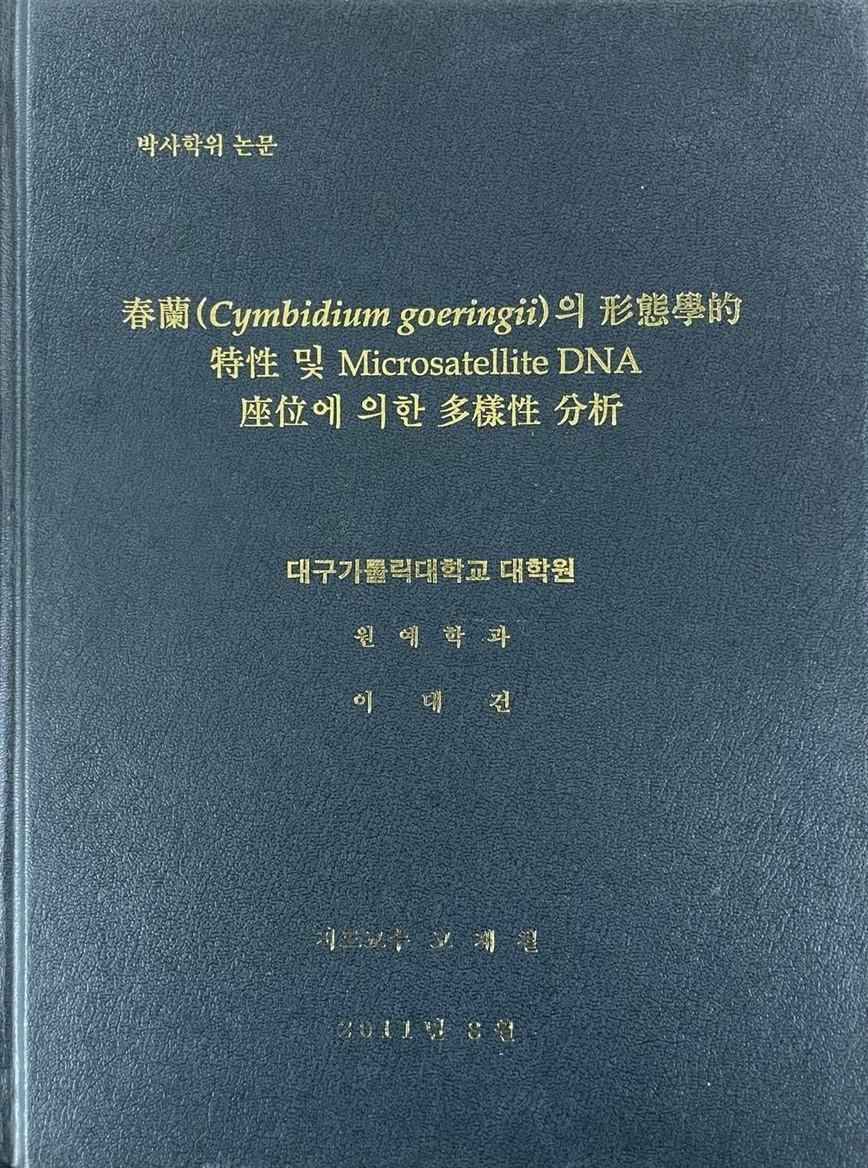
Diversity Analysis of Cymbidium goeringii according to the Morphological Characteristics and Microsatellite DNA Locus
저자: Lee, Dae Gun (이대건)
소속: Department of Horticulture, The Graduate School, Catholic University of Daegu
지도교수: Professor Koh, Jae Chul
발행일: 2011년 08월
(Abstract)
Morphological characteristics of the flowers of Cymbidium goeringii were examined and analyzed. The tested samples revealed that the size of flowers and sepals of Chinese Cymbidium goeringii was larger than Korean ones. And Chinese Cymbidium goeringii showed 54% more anthocyanin spots than Korean ones in the upper part of column and between lip spotted and lip bump anthocyanin spots in Chinese Cymbidium goeringii appeared twice as much as Korean ones, while Korean Cymbidium goeringii showed more anthocyanin spots in peduncles, bracts, and lips than Chinese ones. In the length and width of lip spotted, Korean ones were larger. The shape of lip spotted in Chinese ones was more of V type, and that of Korean ones was more of U type.
Korean Cymbidium goeringii was examined and analyzed according to the places: eastern part and western part of Korea. Few anthocyanin spots were discovered between lip spotted and lip bump in the Cymbidium goeringii grown in the western part of Korea. However those grown in the eastern part showed 44% more small and light spots than those in the western part.
The red anthocyanin in bract of eastern Cymbidium goeringii was 30% deeper than in western ones. The vertical section of sepal of western Cymbidium goeringii bend inside slightly more than that of eastern ones, and the difference was 0.38. The red anthocyanin in sepal of eastern ones was lighter than that in western ones.
In this study S.S.R (simple sequence repeat) method was utilized to analyze and compare among the collections from three different regions; the eastern and western parts of Korea, and China. And GENEPOP S/W program was also used to see their similarities. The result shows the high similarity among them and the similarity range was 0.865~0.999. No differences in DNA was found among 11 markers between the eastern parts and the western parts in Korea.
According to the results of allele analysis, Chinese Cymbidium goeringii showed a lot more diversity than Korean ones. From the results it could be said that Korean Cymbidium goeringii was originated from China. The significant genetic differences among different markers in Korea and China would lead to the separation of Korean Cymbidium goeringii and Chinese ones. Furthermore, markers showing significant genetic differences can be utilized for identifying the origin of Cymbidium goeringii with genetic difference.
As mentioned previously, the genetic similarities in the allele analysis would suggest that the origin of Korean Cymbidium goeringii is China. Great differences between Korean Cymbidium goeringii and Chinese Cymbidium goeringii found in the present study suggest that the seeds can't be easily moved from China to Korea.
연구 실적
기타 연구 논문 및 학술 활동
學士 論文
한국 춘란에 발생하는 병충해의 현황
한국 춘란에 발생하는 주요 병충해의 종류와 발생 현황을 조사하고 분석한 연구
碩士 論文
한국춘란의 삭과 형성 및 종자 발아에 미치는 NaOCl의 영향
한국춘란의 효율적인 종자 발아를 위한 NaOCl 처리 조건 연구
博士 論文
Cymbidium goeringii의 형태학적 특성 및 Microsatellite DNA 좌위에 의한 다양성 분석
한국춘란과 중국춘란의 형태학적 차이 및 유전적 다양성 연구
포스터 발표
한국춘란(Cymbidium goeringii) 종자 발아에 미치는 NaOCl의 영향
원예학회 포스터 발표
화훼연구지
춘란(Cymbidium goeringii)의 개화정도별 삭과 형성 및 종자 발아에 미치는 NaOCl의 영향
FLOWER RESEARCH JOURNAL Vol. 18 No. 4 (December 31, 2010)
SCI-E 논문
춘란(Cymbidium goeringii) 품종의 SSR DNA의 복합 유전자형 결정과 적용
원예 과학 기술지 (2012.06) - SCI-E 등재 논문
협동 연구
춘란(Cymbidium goeringii)의 초다형성 SSR DNA ID와 돌연변이 유도를 통한 우수 신품종의 개발
A.R.P.C 관유정·대가대·공주대·제주대 협동 연구
이대발 난 연구소
한국춘란의 과학적 연구와 발전을 선도하는 전문 연구기관
이대발 난 연구소는 이대건 박사 Dr.Lee가 20년에서 40년간의 현장 경험과 학문적 연구를 바탕으로
체계적이고 과학적인 한국춘란 연구를 수행하는 국내 최초의 춘란 전문 연구기관입니다.
박사학위 과정을 통해 축적된 형태학적 연구 방법론과 유전자 분석 기술을 활용하여
한국 야생 원종의 보호, 진품 증명 시스템 구축, 그리고 재배 기술 발전에 기여하고 있습니다.
앞으로도 이대발 난 연구소는 한국춘란의 과학적 가치를 높이고
전통 난 문화의 발전과 세계화를 위해 끊임없이 연구하고 노력하겠습니다.


